Thinking about shooting your next project in Poland? You're not alone. Over the past decade, Poland has quietly become one of Europe's most attractive filming destinations - offering diverse locations, competitive costs, a 30% cash rebate, and world-class crews. Yet finding reliable, practical information about how it all works can be surprisingly difficult.
This guide covers everything you need to know to plan, budget, and execute a production in Poland - whether it's a commercial, feature film, TV series, or branded content.
 AI-generated image
Why Poland? The Case for Shooting Here
Poland offers a rare combination that's hard to find elsewhere in Europe: first-world infrastructure at competitive prices, with locations that can double for almost anywhere.
Cost advantage. Production costs in Poland run 30-50% lower than in Western Europe. A full crew day that costs EUR 15,000 in Germany or the UK might cost EUR 8,000-10,000 in Poland - with comparable quality. Equipment rental, studio time, accommodation, and catering follow the same pattern.
The 30% cash rebate. Poland's film incentive program, administered by the Polish Film Institute (PISF), offers a 30% cash rebate on qualified Polish expenditure. This applies to international feature films (minimum spend PLN 4 million / approx. EUR 945,000), animations and TV series (PLN 1 million / EUR 235,000), and documentaries (PLN 300,000 / EUR 71,000). For smaller productions, regional film funds in cities like Lodz, Wroclaw, and Krakow offer additional support.
Location diversity. Within a few hours' drive, you can find Baltic coastlines, medieval old towns, Soviet-era brutalist architecture, dense primeval forests, sand dunes that look like the Sahara, modern glass-and-steel cities, and rural landscapes frozen in time. Poland can convincingly double for Germany, Russia, Scandinavia, or even the American Midwest.
Skilled crews. Poland has a long filmmaking tradition - this is the country of Kieslowski, Polanski, and Wajda. The Lodz Film School is one of Europe's oldest. Today, Polish cinematographers, gaffers, and production designers regularly work on international co-productions. Most senior crew members speak fluent English.
Locations: What Poland Has to Offer
The Baltic Coast (Gdynia, Sopot, Gdansk)
The Tri-City area on Poland's northern coast offers a stunning variety within a small radius. The Gdansk Old Town provides centuries-old architecture. Sopot has a resort-town feel with its famous wooden pier. Gdynia offers modernist architecture and a working shipyard with dramatic industrial backdrops.
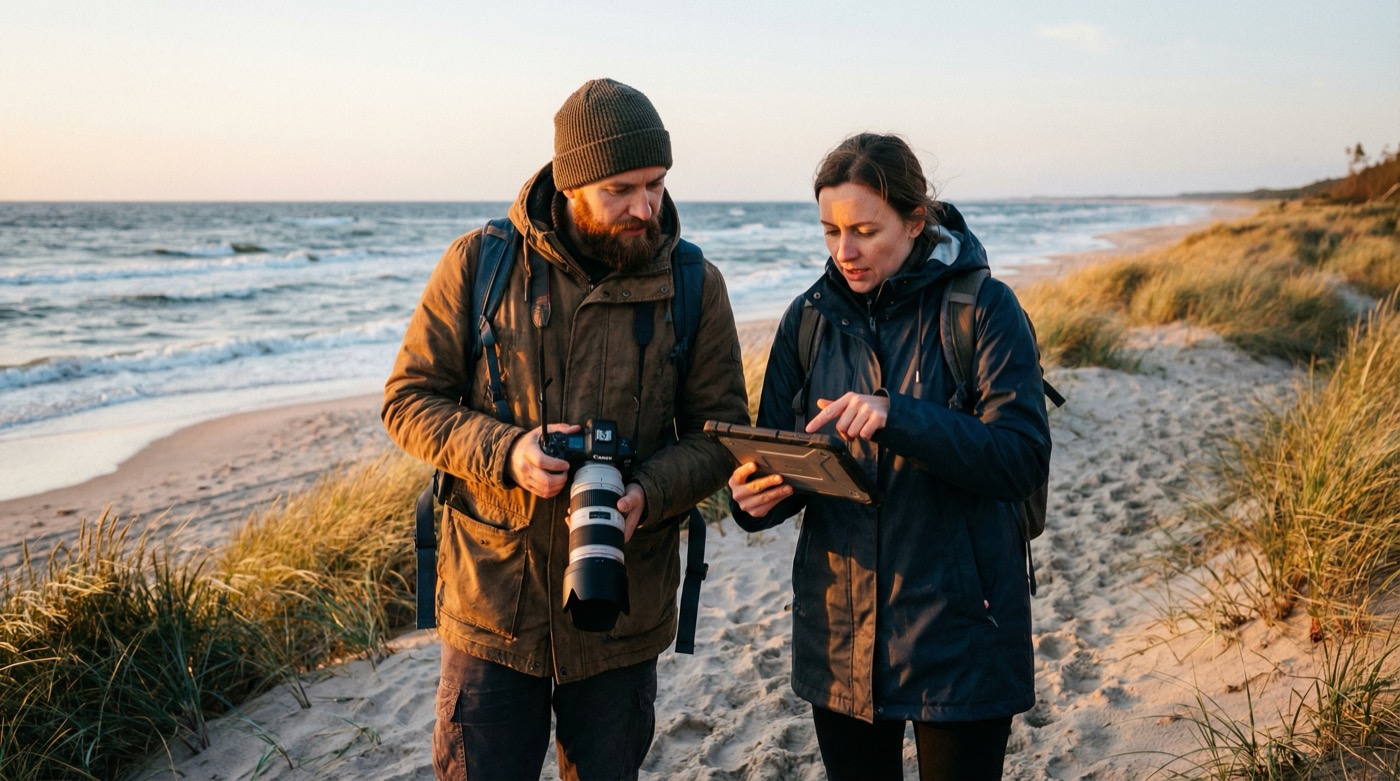
Beyond the cities, the coast stretches into wild, untouched beaches, shifting sand dunes in Slowinski National Park, and coastal forests. The light here is exceptional - long golden hours in summer, dramatic storms in autumn.
Warsaw
Poland's capital is a city of contrasts: the meticulously reconstructed Old Town (UNESCO World Heritage), communist-era tower blocks, and a booming modern skyline. The Palace of Culture and Science is an iconic Soviet-era landmark. The Praga district offers gritty urban textures.
Krakow and Southern Poland
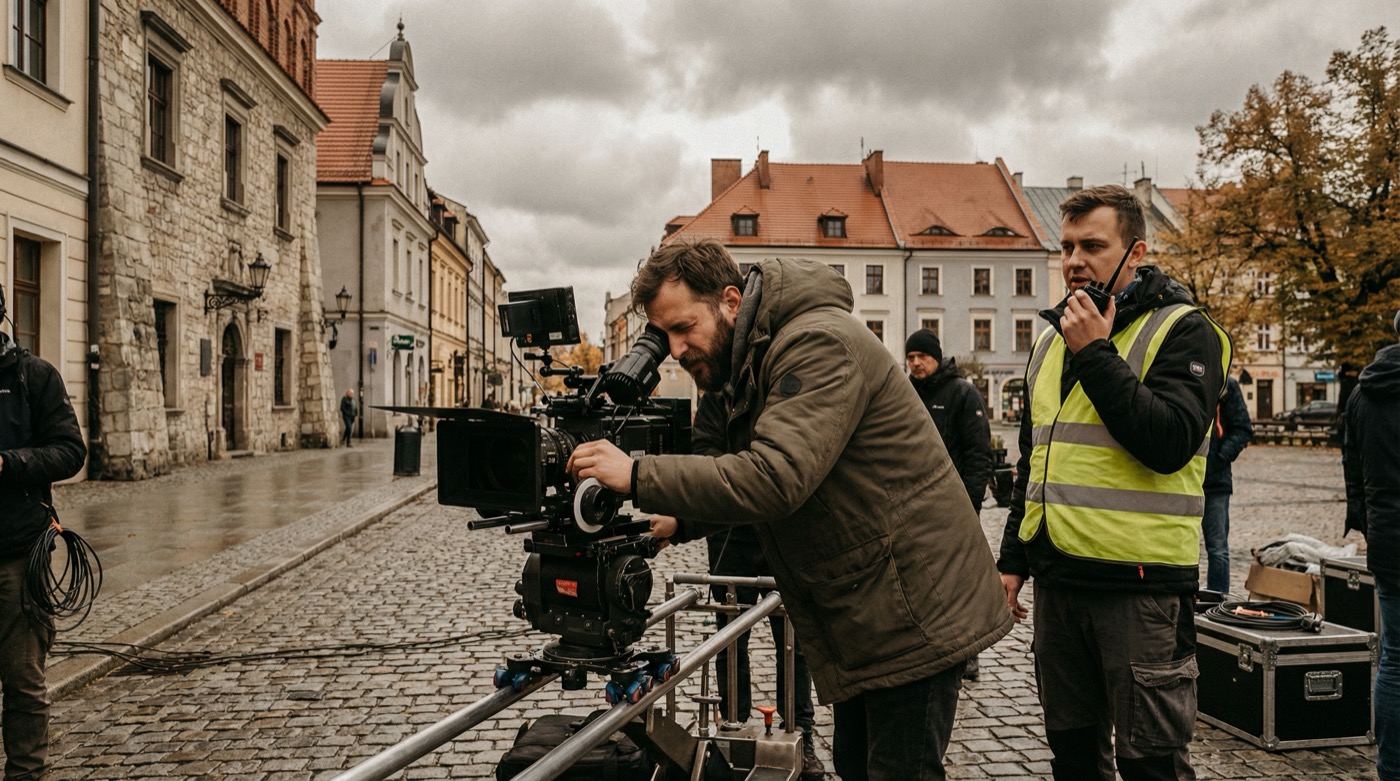
Medieval architecture, the Wieliczka Salt Mine, the Tatra Mountains, and countless castles and manor houses. Krakow's Old Town is one of the best-preserved in Europe. The surrounding countryside offers rolling hills, traditional wooden churches, and mountain villages.
Lodz
Once Poland's industrial powerhouse, Lodz is now a creative hub. Former factories have been converted into cultural spaces (Manufaktura, EC1). The city has purpose-built film studios and a strong post-production infrastructure centered around the Lodz Film School.
Forests, Lakes, and Countryside
The Bialowieza Forest (one of the last remnants of Europe's primeval forests), the Masurian Lake District (2,000+ lakes), and vast agricultural landscapes offer nature locations that are increasingly difficult to find in Western Europe - with no crowds and easy permit access.
 AI-generated image
Costs: What to Expect
Here's a realistic breakdown of production costs in Poland (2026 rates, approximate):
| Item | Cost Range (EUR) | Notes |
|---|---|---|
| Director of Photography | 800-1,500/day | English-speaking, own equipment extra |
| Camera Operator | 400-700/day | Experienced, English-speaking |
| Sound Recordist | 450-700/day | Including basic kit |
| Gaffer + Grip | 250-400/day each | Lighting equipment rental separate |
| Production Manager | 400-700/day | English-speaking |
| Camera Package (ARRI/RED) | 500-1,500/day | Alexa Mini, RED Komodo range |
| Lighting Package | 300-800/day | Depends on scale |
| Studio (Sound Stage) | 800-2,500/day | Warsaw/Lodz, various sizes |
| Catering | 15-25/person/day | Full hot meals on set (breakfast + lunch + dinner) |
| Transport (Van + Driver) | 200-400/day | Including fuel |
| Location Permit (Public) | 50-500/day | Varies by city and location |
A typical 2-day commercial shoot with a 10-person crew, camera and lighting package, one location, and basic post-production coordination might run EUR 15,000-25,000 in total Polish costs - before the 30% rebate.
 AI-generated image
Permits and Legal Requirements
Filming Permits
Poland doesn't have a centralized filming permit system. Permits are handled at the local level:
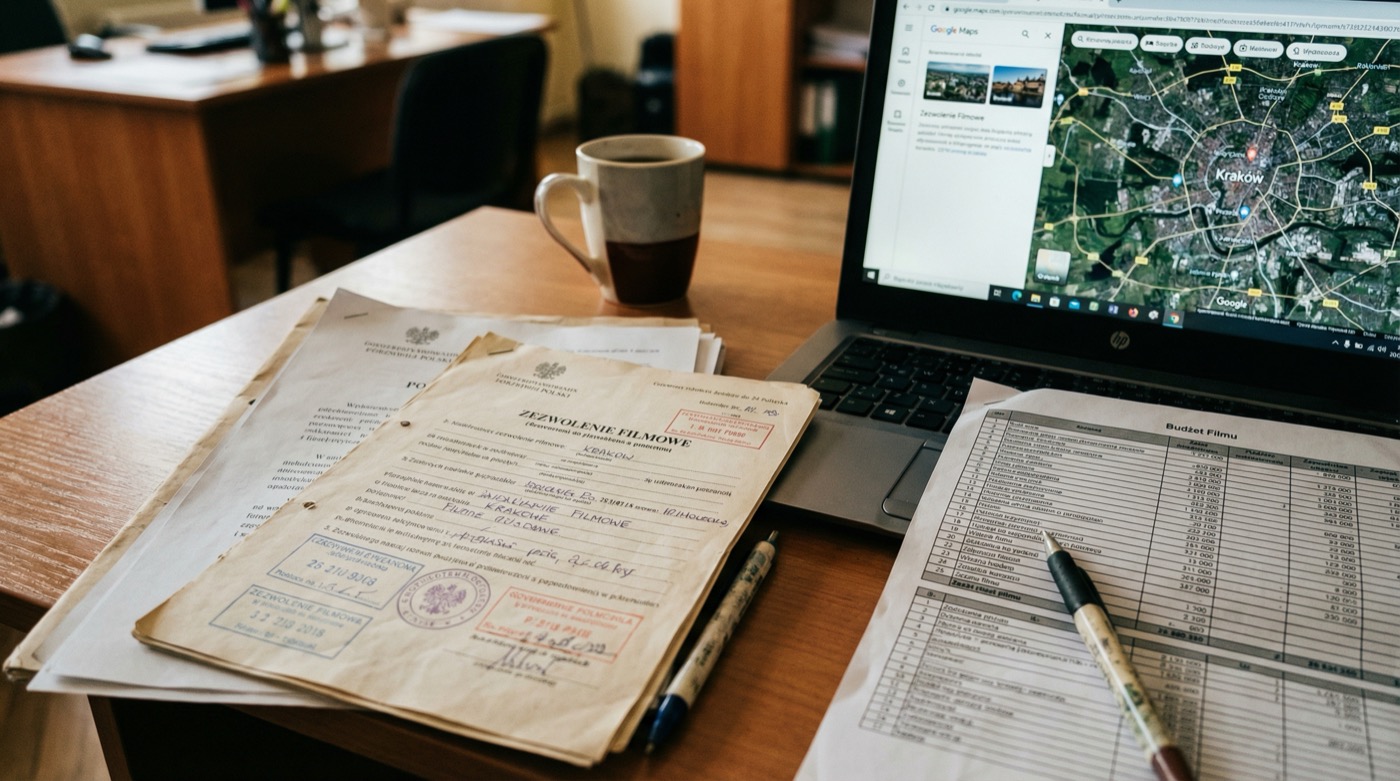
- Public spaces (streets, parks, squares): Apply to the local city or municipal office (Urzad Miasta). Processing time: 2-4 weeks. Cost: varies, often free for small crews.
- Historic sites and monuments: Contact the site administrator or the regional conservator of monuments. Expect stricter rules about equipment, lighting, and crew numbers.
- National parks and forests: Apply to the regional forestry office (Nadlesnictwo) or national park administration. Drone permits require additional approval.
- Private property: Direct agreement with the owner. A standard location release form is sufficient.
Drone Filming
Poland follows EU drone regulations (EASA). For commercial drone operations:
- Register your drone with the Polish Civil Aviation Authority (ULC)
- Obtain an operational authorization for the specific category
- Additional permits may be needed for flights in controlled airspace (near airports) or over restricted areas
Work Permits and Visas
EU/EEA citizens can work freely in Poland. For non-EU crew members, a work permit or work visa is required. Processing time: 2-8 weeks. For short film shoots, a business visa (Schengen) combined with a local production company as the employer of record is the standard approach.
The 30% Cash Rebate: How It Works
Poland's film incentive program is one of Europe's most generous:
- Rebate rate: 30% of qualified Polish expenditure
- Eligible productions: Feature films, documentaries, animations, TV series, TV movies
- Minimum spend: PLN 4 million (~EUR 945,000) for features; PLN 1 million (~EUR 235,000) for animations and TV series; PLN 300,000 (~EUR 71,000) for documentaries
- Application: Submit to the Polish Film Institute (PISF) before production starts
- Cultural test: Your project needs to pass a points-based cultural test (European content, Polish elements)
- Payment timeline: PISF reviews final cost reports within 90 days of submission; expect typically 3-6 months from delivery to payment
Important: The rebate does NOT apply to commercials or corporate videos. For smaller or commercial projects, consider regional film funds which sometimes have more flexible criteria.
Regional Incentives
Several Polish regions offer additional support:
- Lodz Film Fund - support for productions using local studios and crew
- Wroclaw / Lower Silesian Film Fund - grants for productions shooting in Lower Silesia
- Krakow Regional Film Fund - support for Malopolska region productions
- Mazovia / Warsaw Film Fund - grants for productions in the capital region
These regional funds can sometimes be combined with the national rebate.
Hiring a Fixer: What to Look For
A fixer (also called a line producer or production service company) is your most important hire when shooting abroad. In Poland, a good fixer will:
- Scout locations based on your creative brief and present options with photos, access details, and costs
- Handle all permits - from city halls to national parks to drone authorizations
- Assemble local crew - recommend and book Polish crew members who match your requirements
- Arrange equipment - source camera, lighting, grip, and sound packages from local rental houses
- Manage logistics - transport, accommodation, catering, parking, power supply
- Navigate bureaucracy - communicate with local authorities in Polish, handle paperwork
- Provide insurance - arrange local production insurance
- Assist with the cash rebate - help structure your production to qualify
What to Ask a Potential Fixer
- Can you show me examples of international projects you've serviced?
- Do you have English-speaking crew on your roster?
- Are you familiar with the 30% rebate application process?
- Can you handle permits for my specific locations?
- What's your availability for my shooting dates?
- How do you structure your fees (day rate, percentage, package)?
Practical Tips from Experience
Book early for summer. June-August is peak season. Crews, equipment, and popular locations fill up fast. Book at least 6-8 weeks ahead.
Weather windows are real. Poland has four distinct seasons. Summer (June-August) offers the longest days and warmest weather. Spring and autumn provide stunning light but unpredictable rain. Winter (December-February) is cold (down to -15C) but can be beautiful for snow-covered locations.
Don't underestimate distances. Poland is bigger than you think. Warsaw to Gdansk is a 4.5-hour drive. Warsaw to Krakow is 3.5 hours. Plan travel days accordingly.
Polish crews are punctual and professional. But they appreciate clear call sheets, fair overtime policies, and hot meals. A happy crew is a productive crew - this is universal, but worth remembering.
Cash rebate takes planning. If you're targeting the 30% rebate, involve a Polish legal/financial advisor early. The paperwork is manageable but needs to be set up before principal photography.
FAQ
How much does it cost to hire a fixer in Poland?
Fixer day rates typically range from EUR 400-800/day depending on the scope of work. For a full production service (including pre-production, shoot days, and wrap), many fixers offer package deals. Some charge a percentage (10-15%) of the Polish production budget instead of day rates.
Is Poland safe for international film crews?
Yes. Poland is one of the safest countries in Europe. Crime rates are low, infrastructure is modern, healthcare is good, and English is widely spoken in major cities and within the film industry.
How far in advance should I plan a shoot in Poland?
For a straightforward commercial: 4-6 weeks. For a larger production requiring permits, crew assembly, and location scouting: 8-12 weeks. For projects targeting the 30% cash rebate: 3-6 months (due to PISF application processing).
Can Poland double for other countries?
Absolutely. Poland has been used as a stand-in for Germany, Russia, Ukraine, Scandinavia, and Eastern European settings in numerous international productions. The diverse architecture and landscapes make it one of Europe's most versatile filming locations.
Do I need a local production company to shoot in Poland?
Technically no, but practically yes. Permits, employment law, equipment rental contracts, and the cash rebate all require a Polish legal entity. Most international productions partner with a local service company or fixer who acts as the Polish co-producer or service provider.
How do I get started?
The easiest first step is to reach out to a local fixer with your brief, schedule, and budget range. A good fixer can give you a realistic cost estimate within 48 hours and start scouting locations immediately. Contact us at marta@hollylook.com or reach out on WhatsApp +48 601 515 819 - we'd love to help with your next project in Poland.